This project investigates the defining physical relationships that
govern stellar evolution and classification. By leveraging machine
learning pipelines and advanced data visualization techniques on
multi-variable stellar data, I built a predictive model to classify
celestial bodies and empirically validate the structured patterns of
stellar dynamics.
Engineered an end-to-end data pipeline in Python to ingest,
clean, and standardize astrophysical attributes, including
absolute temperature, relative luminosity, relative radius, and
absolute magnitude.
Implemented categorical feature encoding to map non-numerical
variables, such as spectral classes and complex star colors,
into a simplified, numerically structured format optimized for
machine learning algorithms.
Trained and deployed an XGBoost classification model utilizing
Google Colab, achieving 100% predictive accuracy in identifying
star types ranging from Brown Dwarfs to Hypergiants.
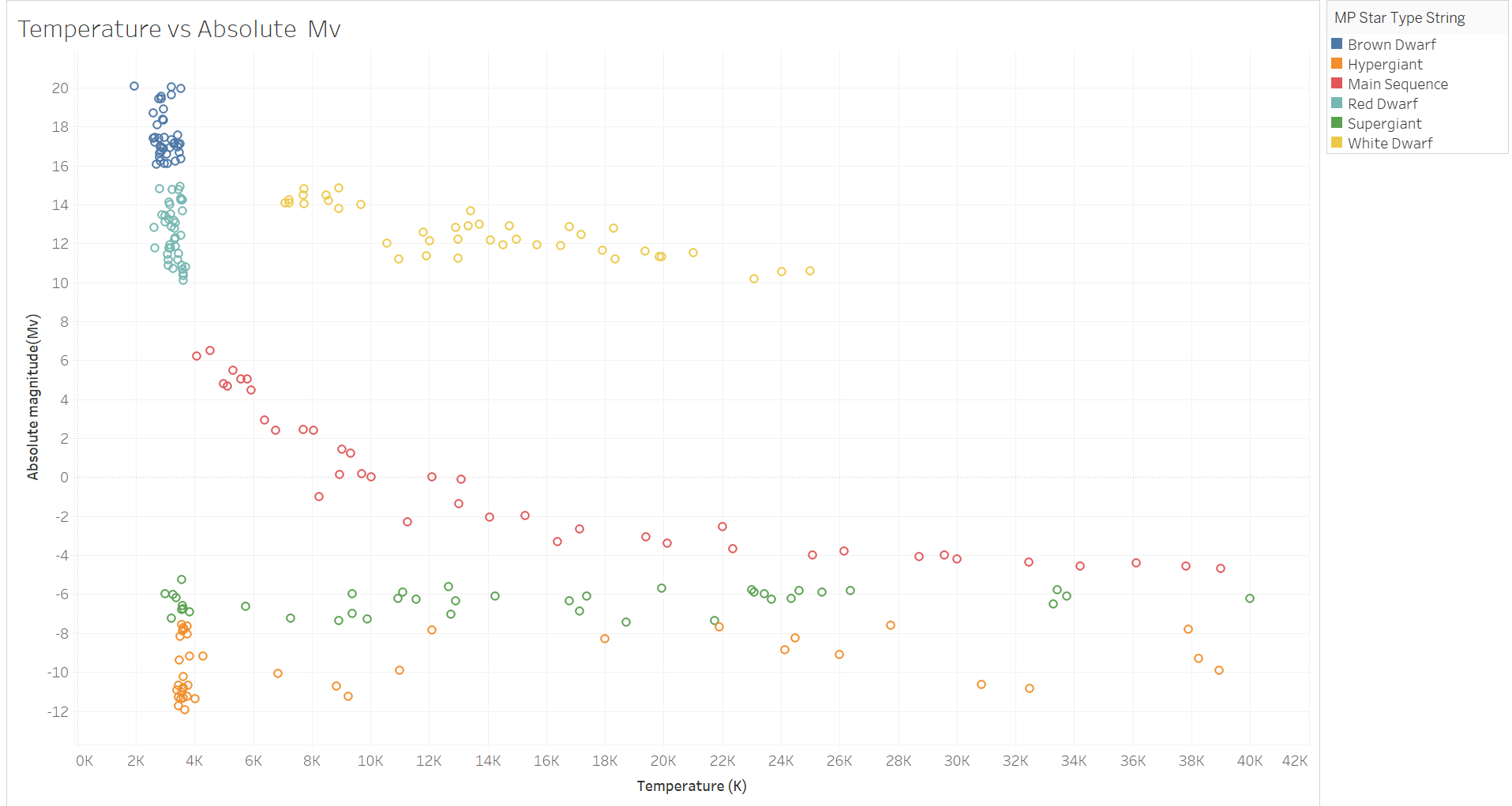
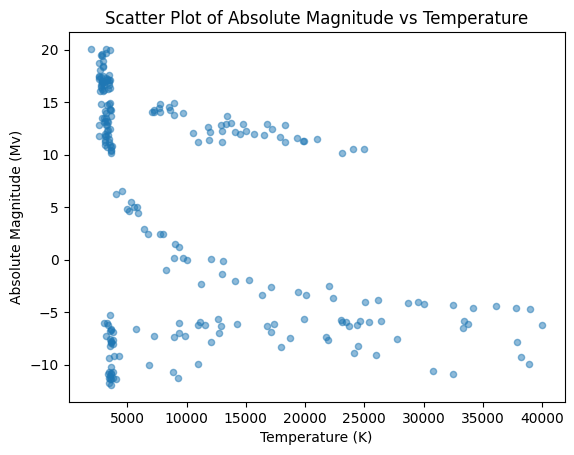
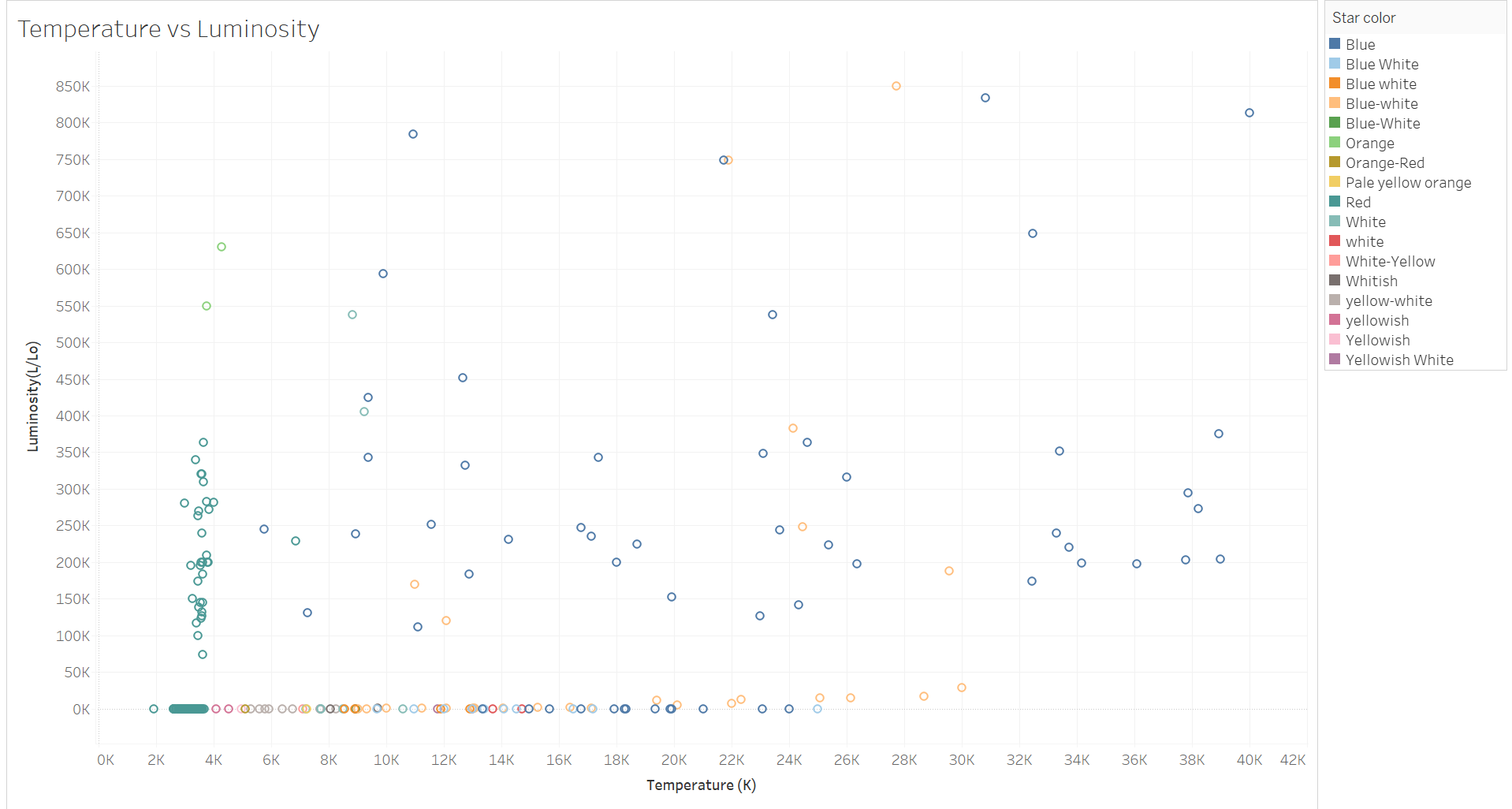
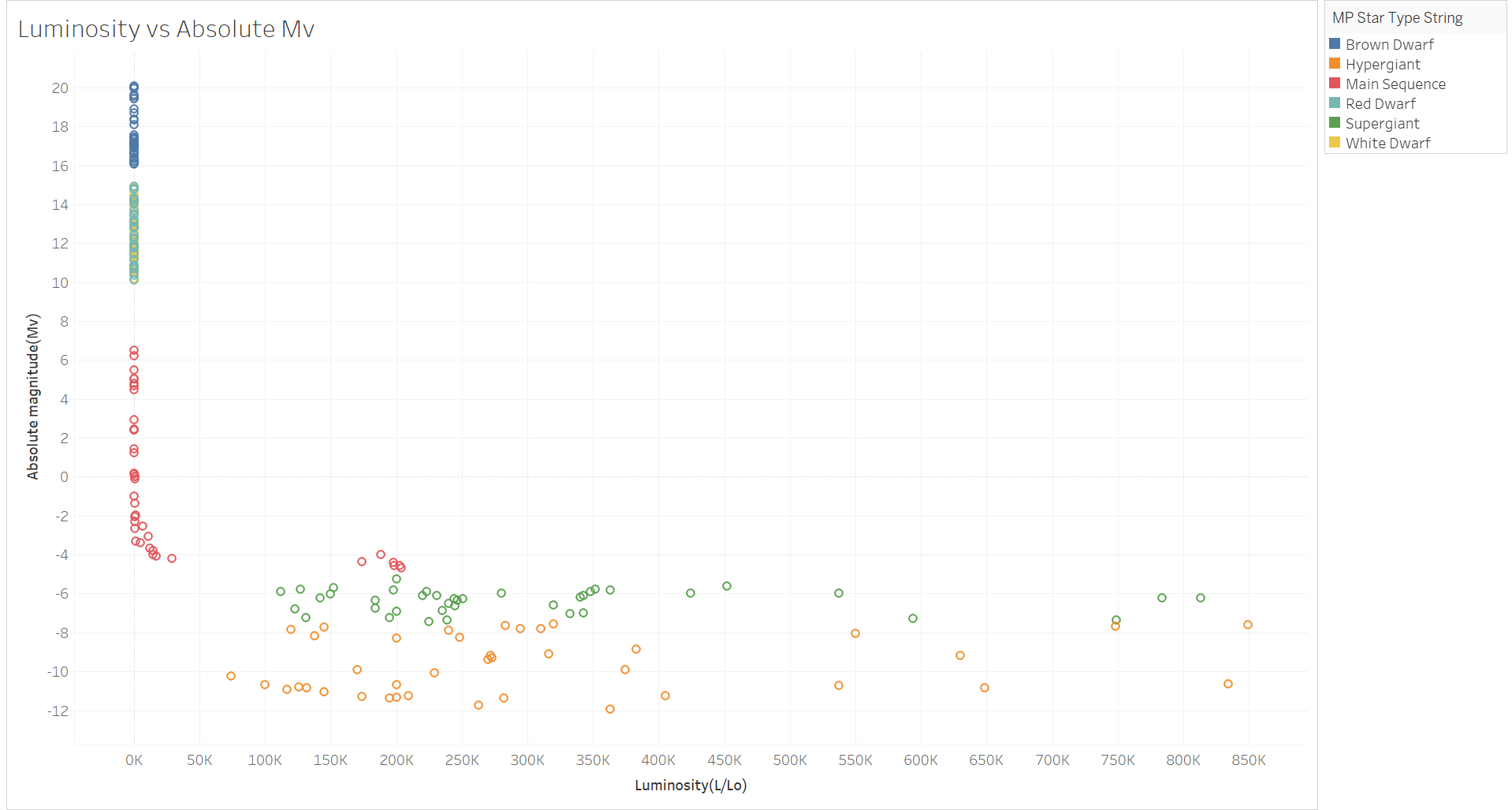
Designed interactive exploratory data visualizations in Tableau
to map fundamental astronomical relationships, such as the
Hertzsprung-Russell (magnitude vs. temperature) and luminosity
vs. radius distributions.
Key tools
Python and machine learning libraries
Data cleaning and visualization
Model evaluation and insight reporting
Visualizations
Temperature vs Average Absolute Magnitude
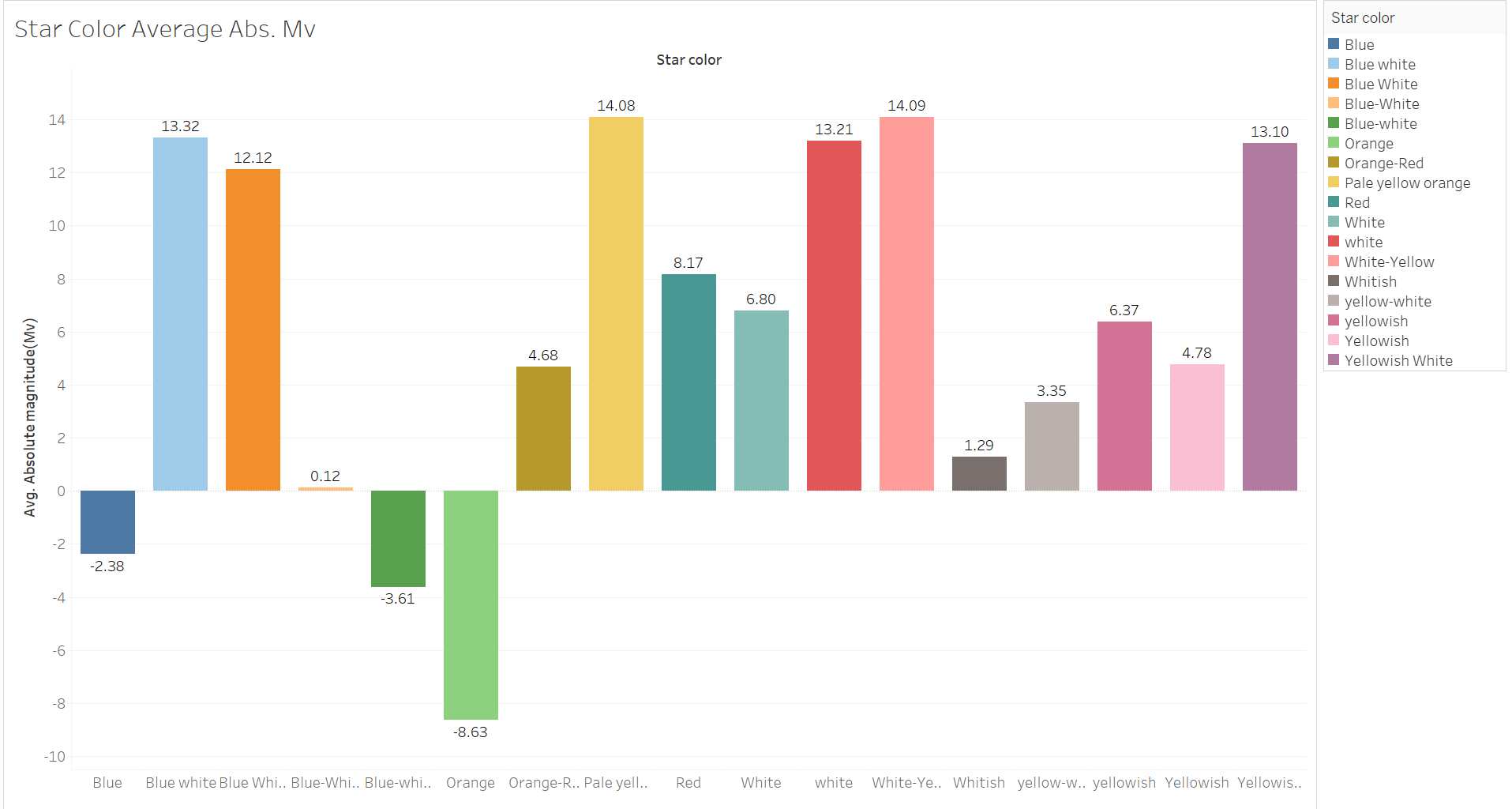
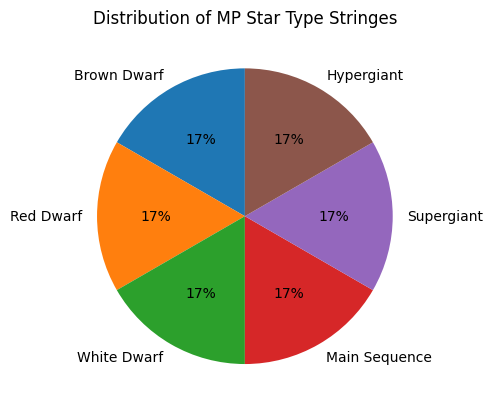
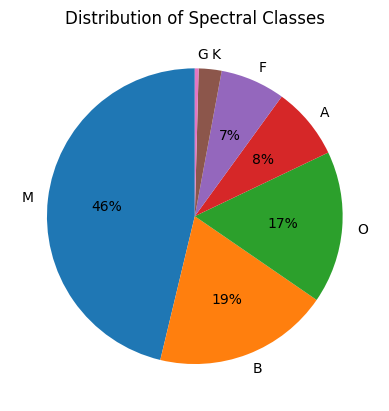
Star Color Average Absolute MagnitudeDistribution of Star TypesDistribution of Spectral ClassAbsolute Magnitude vs TemperatureTemperature vs Luminosity by Star ColorLuminosity vs Absolute Magnitude by Star Type
Applying data-driven methods to astronomy and stellar
classification.